An investment of around DKK 60 million at the Denmark Protein factory in Videbæk, Denmark, is set to significantly reduce the dairy site’s natural gas consumption and CO2 emissions. This is according to a press release from Arla Foods.
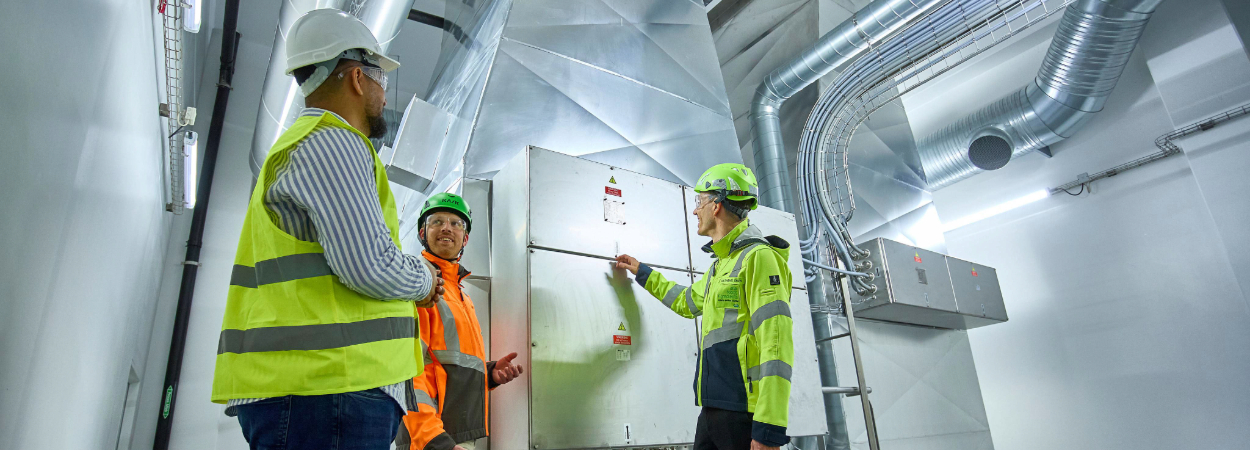
Arla Foods Ingredients has just commissioned a new heating system for production tower 4, enabling it to switch between heat from the factory’s existing steam system and a new electric heater. The new hybrid solution replaces the previous gas burner, allowing electricity from renewable energy sources to take over part of the operation.
Calculations show that the production tower will be able to run entirely on renewable energy 23 per cent of the time. This delivers an annual saving of 2,500 tonnes of CO2 – equivalent to the yearly heat consumption of just over 900 gas-heated households.
Flexible electricity use strengthens the business case
The conversion is a key part of Arla’s strategy to electrify dairy production. Beyond reducing the climate impact, the solution provides important operational flexibility in relation to the Danish electricity grid.
The factory can draw power when wind and solar generation push electricity prices right down, and conversely switch off electricity consumption and revert to steam when high demand causes prices to rise.
“This is one of those investments where we simultaneously strengthen our operational stability and security of supply while reducing our climate impact. The fact that we can achieve such a significant saving with a single solution underlines the potential of electrifying our production,” says Mogens Bøgh Pedersen, Director of the Denmark Protein factory.
Plans to scale up to more facilities
The experience gained from tower 4 is now being carried forward into a similar project for the factory’s tower 5, where gas heating will likewise be replaced with a combined steam and electric heating system.
Once both towers have been converted, the total CO2 reduction will reach 5,200 tonnes annually. The strong results at the ingredients factory in Videbæk also open the door to rolling out the technology across other dairy facilities within the group.
“This is an investment that, alongside securing a solid CO2e saving, is also a genuinely strong business case. It’s therefore a natural solution that we will also look to scale to other of our sites,” explains Paul van Rooij, Vice President Supply Chain at Arla Foods Ingredients.
By Maja Løvstrup
Photo: Arla Foods