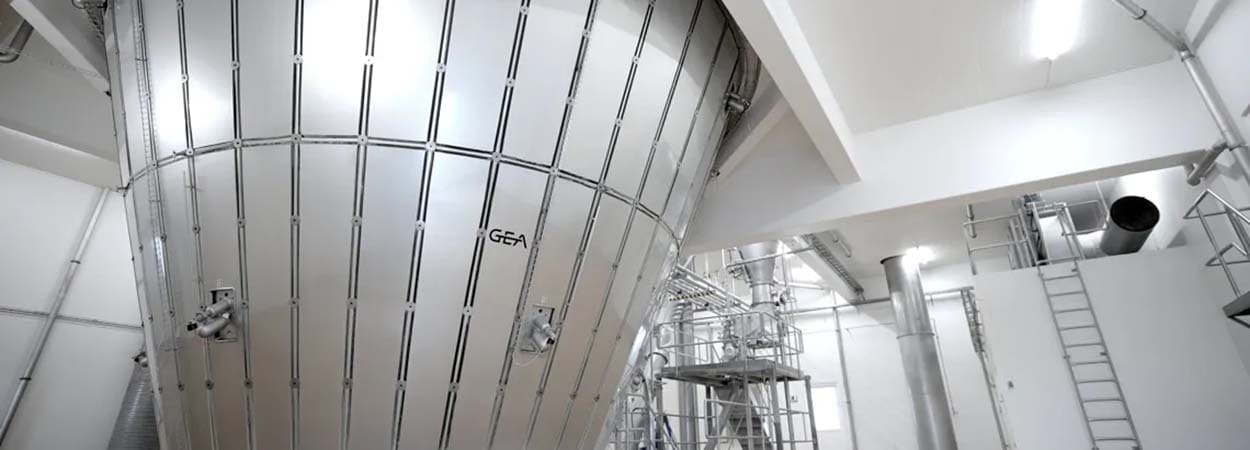
Arla’s high-temperature heat pump at AKAFA is exceeding expectations, cutting natural gas consumption by 60%. The company is now assessing the potential for a broader rollout of the technology.
Since the summer of 2024, a CO₂-based high-temperature heat pump has been operating reliably at AKAFA in Svenstrup. Arla Foods announced the installation as a milestone in October 2025, and concrete operational experience from more than a year of operation is now available.
– In terms of both performance and efficiency, the heat pump is actually performing slightly better than expected, which we attribute to its strong integration with the spray dryer, says Bent Aage Kristensen, Energy & Sustainability Manager at Arla Foods, to the Danish trade magazine Maskinmesteren.
Technical breakthrough in an energy-intensive process
Spray drying is one of the most energy-intensive processes in dairy production. At AKAFA, around 350 million kg of milk are processed annually into approximately 50 million kg of milk powder—primarily for export.
The heat pump is integrated as the second stage of the drying process, where it raises the air temperature from around 30°C to 120°C using recovered heat and CO₂ as the refrigerant.
– The heat pump operates as the second stage, increasing the temperature from 30 to 120 degrees, which means we no longer need gas boilers for that step resulting in significant natural gas savings, says Johannes Kronegh Larsen, Project Manager at AKAFA, to Maskinmesteren.
The result is a reduction in natural gas consumption of nearly 60%, corresponding to more than 1,500 tonnes of CO₂ annually. At the same time, the system contributes to cooling by producing chilled water for the dairy’s cooling processes.
Tailor-made solution proved successful
The heat pump delivers 1 MW of heat and 400 kW of cooling, with a coefficient of performance (COP) of approximately 2.5 – and even higher when both heat and cooling are utilised. The system is expected to operate around 7,800 hours per year.
The technology is the result of close development collaboration between Arla and the supplier GEA, which also delivered the spray drying plant. CO₂ was selected as the refrigerant because it matches the temperature range and meets Arla’s requirements for natural refrigerants.
– You can’t simply buy a standard heat pump that meets our specific requirements for delivering high-temperature heat in a stable and energy-efficient way. That’s why we now have a completely new heat pump, which for now is one of a kind, says Johannes Kronegh Larsen to Maskinmesteren.
Positive business case paves the way for rollout
With a payback period of 6–8 years primarily driven by gas savings and reduced electricity consumption for cooling the investment presents an attractive business case.
The project also contributes to Arla Foods’ Science Based Targets, which aim to reduce emissions from the company’s own processes and energy use by 63% by 2030 compared with 2015.
– We are on a journey towards increased electrification, where heat pumps will play a major role. Based on the strong results at AKAFA, we will now explore the potential for rolling out high-temperature heat pump technology more broadly across our production, says Peter Schneider, Chief Specialist at Arla Foods, to Maskinmesteren.
By Maja Løvstrup
Source: Maskinmesteren
Photo: Arla