Arla is now selling climate data from milk production to customers in Sweden and is working towards launching in Germany, Finland and the Netherlands – but value chain emissions have nonetheless increased in 2025.
Arla’s programme for selling product-specific climate data, the Farmahead Customer Partnership, is growing. This emerges from an article in Danish food industry outlet FødevareWatch.
In 2025, Arla is selling milk with a green premium for climate data equivalent to 4.5 billion kilograms, representing 31.5 per cent of the dairy group’s total volume sales of 14.3 billion kilograms. In 2024, the share stood at 29.2 per cent, equivalent to 4 billion kilograms.
The programme, originally launched to Danish customers in 2023, has now been extended to include customers in Sweden – and Arla is working to launch the concept in Germany, Finland and the Netherlands.
New categories and named partnerships
The climate data concept has previously focused primarily on drinking milk. In 2025, milk with climate data is being sold at a premium across a broader range of product categories.
According to FødevareWatch, Arla’s head of press Bjarke Kamstrup states in an email that the company has established concrete partnerships with, among others, Asda, McDonald’s and Lidl, and that customer interest in supporting cooperative members’ efforts to improve climate efficiency on farms remains strong.
Customer interest is partly driven by their own reporting obligations. As Kamstrup explains to FødevareWatch:
“Our customers have set ambitious climate targets, many of which have been validated by the Science Based Targets initiative, placing significant demands on their reporting. They therefore need transparent and concrete data from their scope 3 suppliers, for some of whom Arla represents a relatively large share.”
Emissions not keeping pace
Despite the programme’s growth, Arla’s total value chain emissions have risen in 2025, FødevareWatch reports. Measured on a relative basis per kilogram of milk produced, however, Arla has shown consistent progress: a kilogram of Arla milk now generates on average 9.9 per cent less CO2e than in 2020.
Arla does not dismiss the challenge, but maintains its current approach, according to FødevareWatch. Kamstrup writes to the outlet:
“We believe our Farmahead programme is the right approach to delivering reductions, and the task ahead for us and our cooperative members remains unchanged.”
By Maja Løvstrup
Source: FødevareWatch
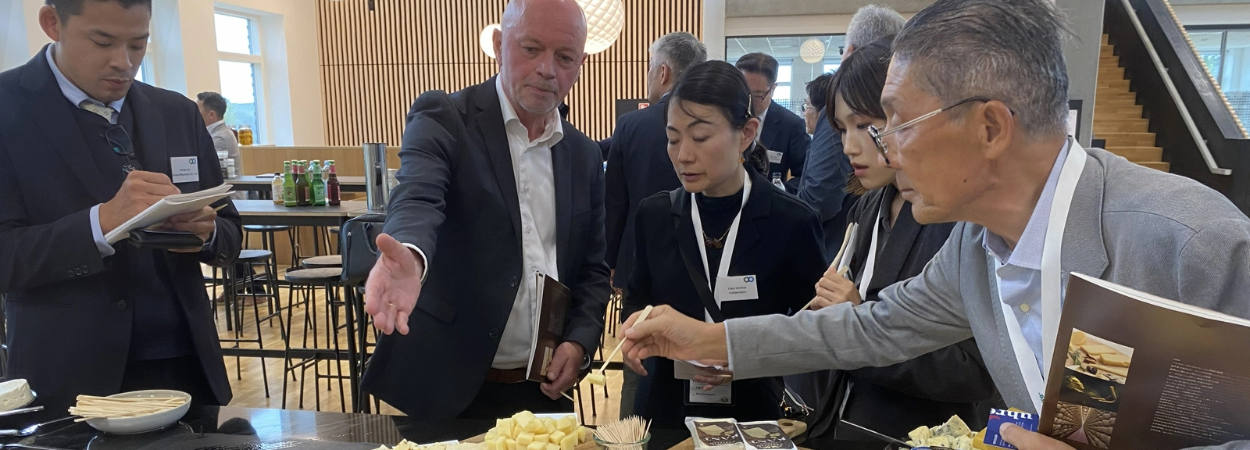
Photo: Arla