Results from the ClimateMilk research project show that methane-reducing feeding strategies can be implemented without compromising milk quality or functionality.
How does climate-friendly feed actually affect milk quality and the properties of dairy products? That question has been explored in the ClimateMilk research project, a collaboration between Aarhus University, Arla Foods and DSM. Among other things, the project investigated the effects of crushed rapeseed, nitrate and Bovaer in the feed of dairy cows. The background is the growing requirement for methane reduction in Danish milk production, where larger conventional dairy farms will be subject to new climate regulations from 2025.
No negative effects on functionality
According to the project results, the methane-reducing strategies did not negatively affect the functional properties of the milk or butter quality.The researchers did, however, observe minor changes in the composition of the milk. Among other things, fat supplementation resulted in higher levels of unsaturated fatty acids and vitamins in the milk, while nitrate and Bovaer had a smaller impact on the fatty acid composition.The project also investigated whether residues of Bovaer could be detected in the milk. Here, the researchers were unable to demonstrate any transfer to the milk.Nitrate levels also remained well below the applicable limit values.
New knowledge about climate-reducing feeding strategies
Methane-reducing feeding strategies are expected to become increasingly important as new climate and documentation requirements are introduced in milk production. The project therefore contributes new knowledge about the relationship between climate-reducing feeding strategies, milk composition and the quality of dairy products.
Read the full article in Mælkeritidende no. 4, published on 12 June.
By Maja Løvstrup
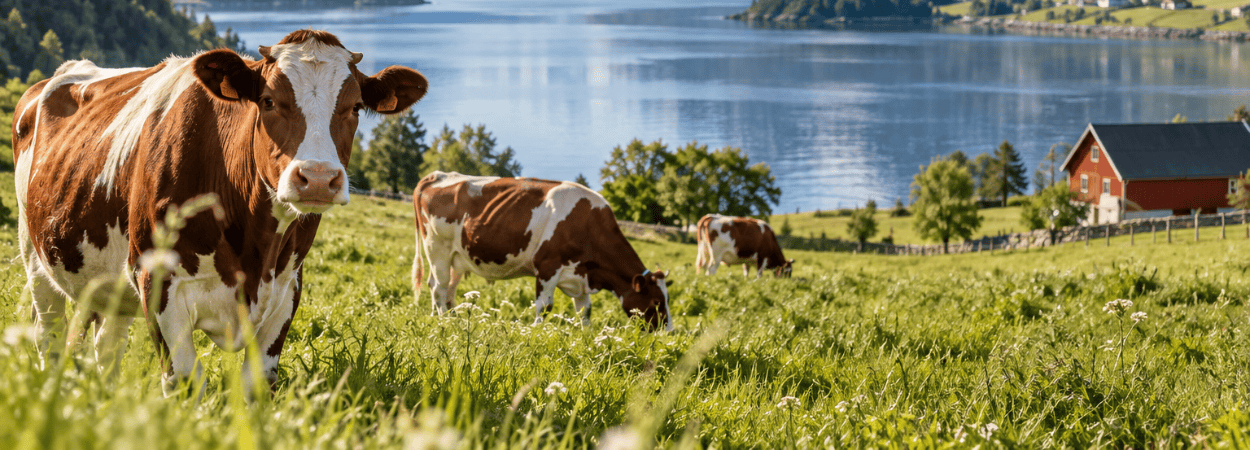
Illustration: Louis Reed / Unsplash