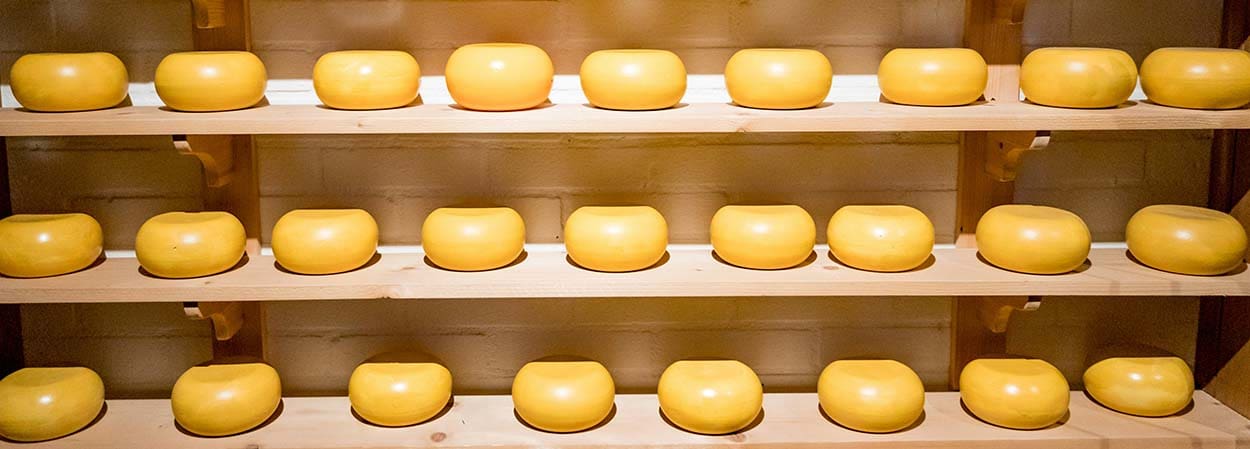
A new research review from the DTU National Food Institute shows that five simple measures can make cheese production both more efficient and more sustainable.
A research team from DTU has reviewed existing studies on cheese fermentation and ripening in a comprehensive literature study. In an article published on DTU’s website, the researchers highlight five underutilised, science-based approaches that can improve both the efficiency and sustainability of cheese production – without requiring major changes to dairy processes.
The five recommendations:
1) Use more autolytic starter cultures
When lactic acid bacteria begin to break down slightly earlier in the process (autolysis), they release enzymes and compounds that help flavour develop faster and more consistently. This new type of starter culture can therefore shorten the ripening period and reduce storage time.
2) Adjust the surface pH to accelerate ripening
For cheeses that ripen with the help of surface microorganisms, dairies can speed up the maturation process by controlling the pH level of the rind. This also helps prevent unwanted growth of moulds or potentially harmful Listeria bacteria. It’s mainly a matter of adjusting brine, washing, and humidity – something most dairies already have the equipment for.
3) Protect lactic acid bacteria from bacteriophages through encapsulation
Encapsulating lactic acid bacteria physically shields them from viral attacks (bacteriophages) during the critical early hours of production. The method is already known from other food processes and can be integrated naturally into dairy operations. It results in fewer failed fermentations and more consistent batches, while also avoiding the costly and cumbersome need to alternate between different starter cultures to keep bacteriophages at bay.
4) Use bacteriophages in a controlled way
Very small, carefully controlled amounts of bacteriophages can be used to make the starter culture “switch itself off” at a specific point in the process. When the bacteria break down in this way, they release enzymes and other compounds that contribute to flavour – thus speeding up ripening. The method requires tight process control and clear parameters, but it is straightforward and may be particularly relevant for cheese types with long flavour development times.
5) Create more value from whey
Technologies for recovering whey proteins and reintegrating them into the cheese mass have been described in scientific literature. According to the review, this can increase cheese yield by up to 30%, while preserving nutritional value and reducing by-products. Alternatively, whey can be utilised microbially, allowing dairies to extract more value from it – for example, as an ingredient – rather than selling it off cheaply.
Read more HERE
Photo: Luann Hunt, Unsplash
By LWM