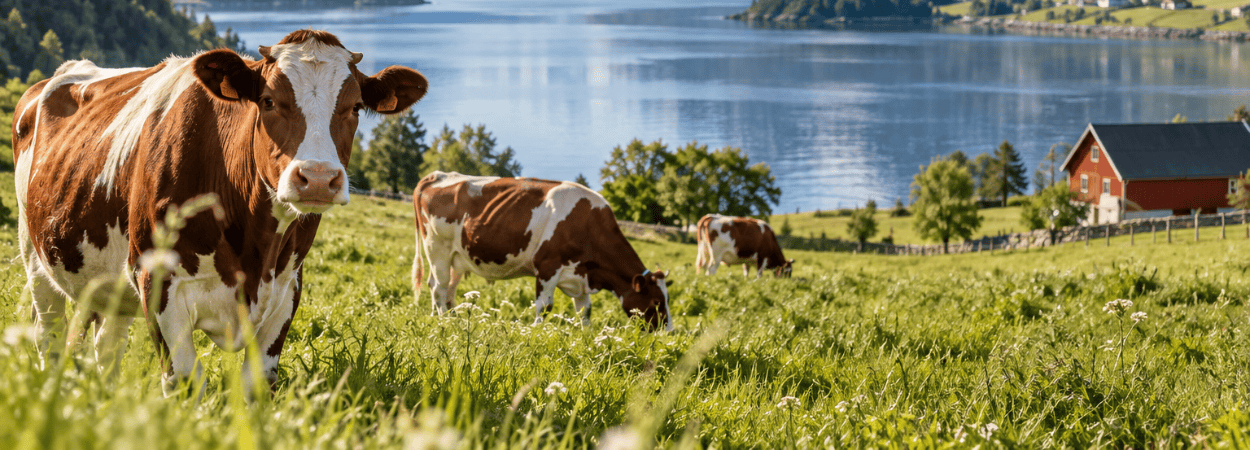
From the turn of the year, Arla farmers will be able to earn three additional sustainability points under the FarmAhead™ remuneration scheme by growing more diverse grass leys and preserving permanent grassland.
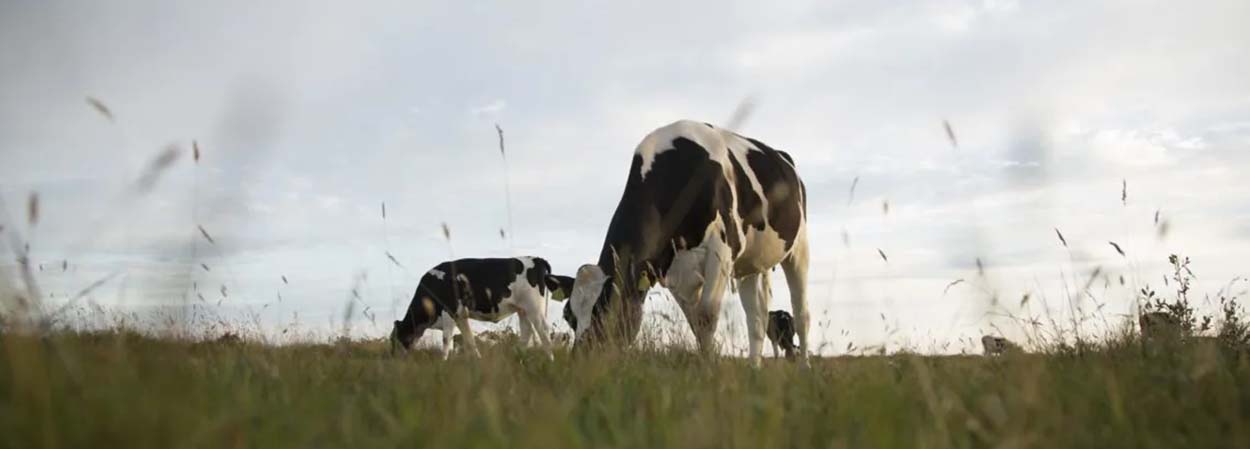
The new points reward practices that benefit both the climate and biodiversity, including multi-species leys and the protection of long-established grassland. Four in five Swedish Arla farmers have animals grazing on semi-natural pastures, and this work is now being rewarded through FarmAhead™ payments. Although many Swedish farmers will benefit, the points system is part of an international Arla scheme that applies to Arla farmers across Europe.
Since the sustainability payment was introduced in 2022, Arla farmers have been able to boost their milk price by carrying out measures on farm that reduce climate emissions and promote biodiversity. Climate and environmental actions are rewarded with points, with each point worth €0.03 cents per kilo of milk.
The new sustainability points are based on increased carbon sequestration through the cultivation of more diverse leys and the maintenance of long-term grassland and semi-natural pastures. By combining different plant species such as herbs, legumes and perennial grasses, farmers create a more varied root system that improves soil structure and enables more efficient use of resources. As a result, the total number of points available will rise from 81 to 84 from 2026.
– We want to highlight the important work many farmers are already doing on their farms. Having cows and heifers out grazing and investing in more diverse leys is good both for the climate and for the land. It feels right that we can now reward this,” said Gustav Kämpe in a press release from Arla Sweden. Kämpe is a dairy farmer in Karlsborg and one of four Swedish board members of Arla.
As part of the changes, a new point for manure management was introduced on 1 April 2025. These rewards spreading a larger share of manure directly on pasture, which results in lower methane emissions than when manure is stored in slurry tanks. The necessary documentation is already included in Arla’s climate calculations and therefore does not add any extra administrative burden for farmers.
Facts: Grass leys
Grass leys are Sweden’s largest crop and usually consist of a mixture of grasses and clover. Leys are perennial crops that can be harvested for several years, typically two to four times during the growing season, making them different from crops such as cereals. A high-quality ley with the right balance of protein, energy and fibre is crucial for sustainable and profitable milk and meat production. Grass leys are grown on just over 40 per cent of Sweden’s total arable land.
Af Lene Mikkelsen Walsh
Foto: Arla