Researchers at the University of Copenhagen have mapped how acidification and heat treatment of milk can create cheese-like gels that retain their shape when fried or boiled – a property that could be used in both grilled foods and plant-based meat alternatives.
A multi-year research projectresearch project named Gelcook has investigated how milk proteins behave when milk is acidified at high temperatures. The result is gels that do not melt or flow when heated, unlike traditional cheese. This is according to Professor Lilia M. Ahrné from the Department of Food Science at the University of Copenhagen, writing in the latest issue of Mælkeritidende, the Danish dairy trade journal.
The project set out to understand the mechanisms behind the formation of heat- and acid-induced milk gels, and how the acidification process and milk composition can be used to control the gels’ structure and stability during cooking.
Acidification temperature determines gel strength
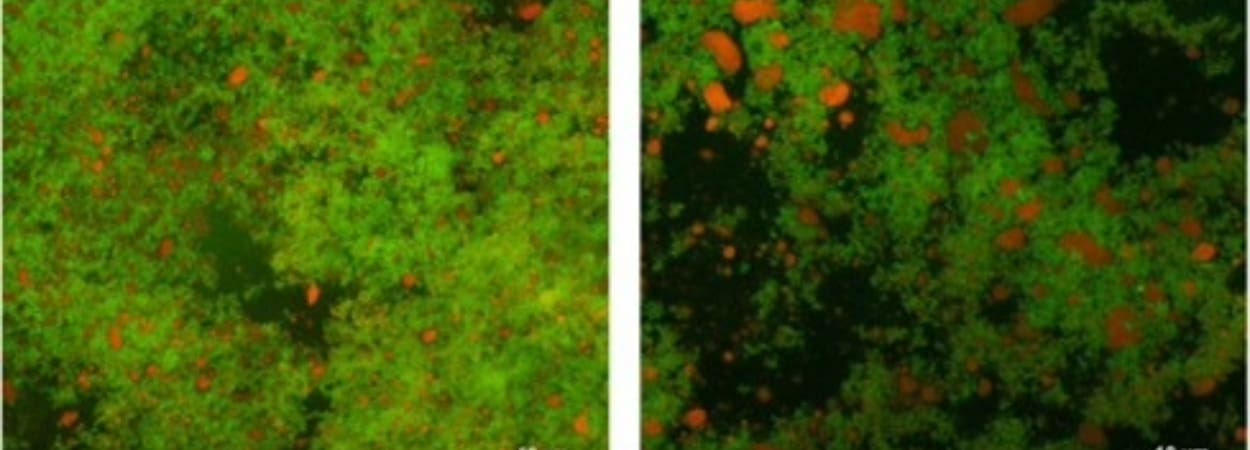
According to the research, acidification temperature has a significant effect on how milk proteins bind together. As the temperature is raised from 60 to 90 degrees, the proportion of calcium bonds rises sharply, producing a more compact structure and firmer, more elastic gels. Analyses of water mobility within the gels confirmed that higher acidification temperatures result in a denser protein network.
Milk type and protein content play a role
The type of milk and its protein composition also play a central role. Buffalo milk, which naturally has a higher casein content than cow’s milk, produces firmer, drier and denser gels. Similarly, trials show that a higher whey protein content in cow’s milk produces softer, moister gels. According to the researchers, this means protein type and content can be used as a tool to tailor the texture of products.
Retains moisture during cooking
Trials also showed that cooking softens the gels, but that only gels acidified at high temperatures absorb water when boiled in salted water. According to the researchers, this ability to retain moisture after processing could be particularly valuable in developing juicy, meat-like textures in alternative protein products.
The researchers point out that the findings give the dairy and food industries new tools to tailor the structure and function of the gels – opening the way for the development of heat-stable cheese types, including for use as meat alternatives or novel cheese formats.
Read more in Mælkeritidende no. 6, published on 18 September.
By Maja Løvstrup
Photo: University of Copenhagen