Following the merger with German dairy company DMK, Arla has become Europe’s largest dairy cooperative, with 11,200 owners across seven countries. For chief executive Peder Tuborgh, who has led the company for 21 years, the new scale is above all about extracting more value from a far larger milk pool. He said this in an interview with Danish newspaper Jyllands-Posten.
Arla’s merger with the German dairy company DMK in the summer of 2026 has made the Danish dairy group Europe’s largest dairy cooperative. Following the merger, Arla now counts around 11,200 owners from agriculture across seven Northern European countries, 28,800 employees and a combined milk pool of 19.4 billion kilos. Expected annual turnover stands at 150 billion Danish kroner, and the group is set to climb markedly up the list of Denmark’s largest companies once the German partner’s figures are fully reflected in the accounts.
For Peder Tuborgh, who has been chief executive since 2005, the increased scale is not about size for its own sake, but about the ability to process a far greater volume of milk into higher-value products.
“We’re not just becoming bigger, we’re becoming better,” he told Jyllands-Posten.
Value-added processing as a core principle
According to Tuborgh, value-added processing – transforming milk into higher-value products such as brands and ingredients rather than selling it as a raw commodity – is not a strategy that shifts with the market, but a fundamental way of running the business.
“It’s not even a strategy. It’s DNA,” he told Jyllands-Posten.
He points out that the group’s strong protein business has this year offset pressured milk prices paid to owners, a result of record milk supply across Europe. In the first half of the year, Arla Skyr grew by 39.6 per cent, Arla Protein by 34.4 per cent and Arla Foods Ingredients by 19.3 per cent.
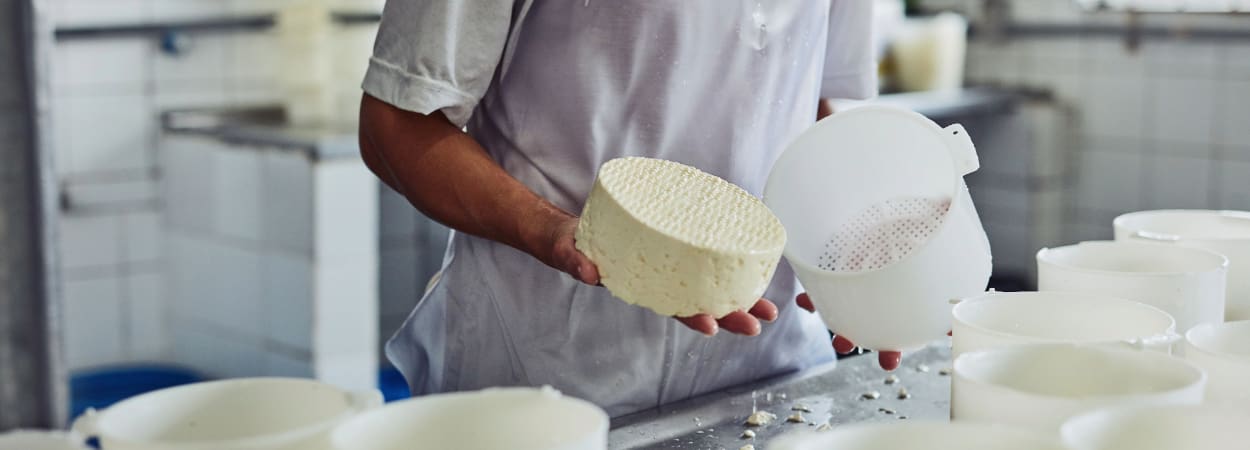
The merger with DMK also gives Arla access to substantial cheese production, whilst the German company gains access to Arla’s global sales network and innovation programmes. The combined investment budget for the merged group will be increased by 25 per cent in 2027 compared with this year, Tuborgh told the newspaper. According to the chief executive, the merger should not put other initiatives on hold – Arla Foods has accordingly extended its current strategy through to 2028.
By Maja Løvstrup
Source: Jyllands-Posten
Photo: Arla Foods